
Archives
- Home
- Archives
West Northamptonshire grant helps bring life-changing pelvic floor therapy to community
This article was originally published in the Northampton Chronicle and Echo.
A West Northamptonshire business owner recognised at this year’s Inspirational Women Awards is using the spotlight to shine a light on a health issue many people still suffer with in silence – and on the local grant support that helped bring a much-needed solution to the community.
In simple terms, body sculpting refers to procedures that reshape or refine the appearance of your body by targeting fat, muscle tone, and skin elasticity. These can be surgical (like liposuction) or non-invasive (such as radiofrequency or electromagnetic energy-based treatments). However, it’s important to note that body sculpting is not a substitute for weight loss—rather, it’s ideal for addressing areas that don’t respond to exercise and diet.
ExCo
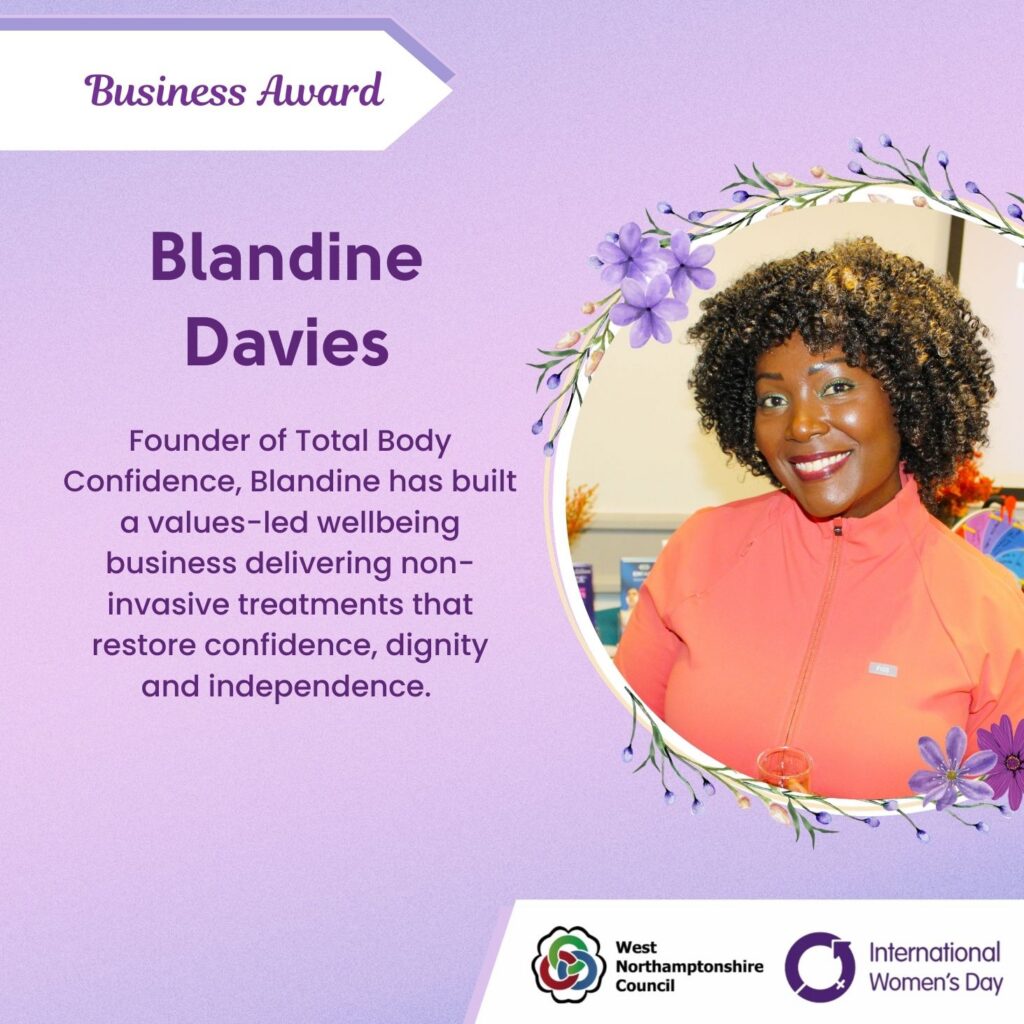
Blandine, founder of Total Body Confidence Northampton, was shortlisted for West Northamptonshire’s International Women’s Day 2026 Inspirational Woman Award in the Business category, with West Northamptonshire Council confirming that eight women in total were shortlisted across the awards.
Her clinic’s Emsella chair, part-funded through a local West Northamptonshire grant, is now helping women and men across the region access non-invasive pelvic floor therapy designed to strengthen weakened pelvic floor muscles, improve bladder control and support intimate wellness. Total Body Confidence describes Emsella as a non-invasive treatment for urinary incontinence and sexual dysfunction in both men and women, carried out fully clothed while seated.
At the International Women’s Day event on Saturday 7 March, Blandine took the Emsella chair along to help start conversations around pelvic health and prevention. Around 25 people tried the chair on the day, with many saying they could feel the treatment working internally on the pelvic floor muscles and were surprised by how comfortable and effective it felt.
For Blandine, the event reflected this year’s International Women’s Day theme, Give to Gain, in a very practical way: when female-led businesses are backed to innovate, communities gain access to services that can restore confidence, dignity and independence.
“Too many people still believe bladder leaks are simply something they have to put up with,” said Blandine. “What this grant made possible was the chance to bring a genuinely effective, non-invasive, low-risk treatment option into our local community and health ecosystem – one that is helping people feel more confident in everyday life again at a time when more choice and earlier support are badly needed.”
Pelvic floor weakness is often associated only with new mothers or older women, but Blandine says the reality is much broader. The treatment can benefit adults of all ages, including postpartum women, people going through perimenopause or menopause, younger adults involved in high-impact sport, and men experiencing bladder control problems linked to an enlarged prostate or following prostate surgery. Total Body Confidence also highlights wider pelvic floor support, including posture, lower back support, gait and intimate wellness.
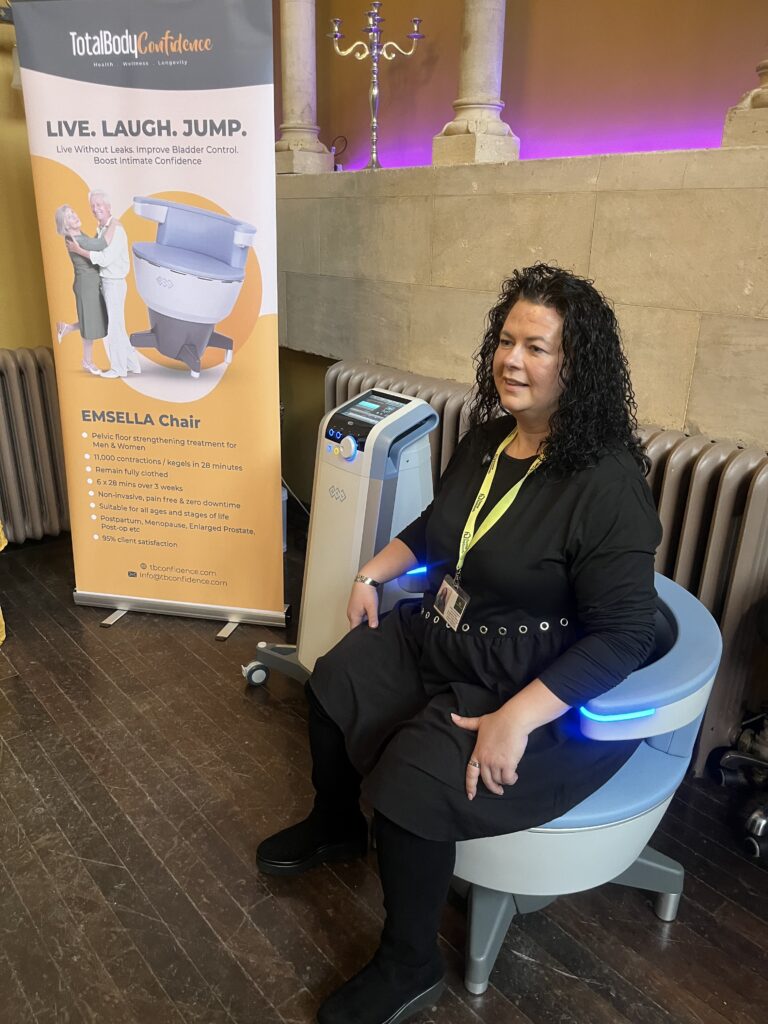
What makes the treatment stand out is its simplicity. Rather than an invasive procedure or lengthy recovery, clients remain fully clothed (maintaining their dignity) and sit comfortably for around half an hour while the chair delivers the equivalent of 11,200 pelvic floor contractions in a single session. A course typically consists of six sessions over three weeks. For the vast majority of individuals, treatment results are long lasting and, for many clients, eliminate or significantly reduce the need for protective pads.
The scale of the issue still surprises many people. Continence services and NHS patient information commonly describe bladder weakness and incontinence as affecting around one in three people at some point in life. Yet despite how common it is, it remains a subject many people do not want to talk about, and published clinical commentary suggests those affected may wait an average of around six years before seeking medical help.
Feedback from clients is that the treatment can have a meaningful effect not only on bladder control, but on quality of life. One client said: “My first emsella chair session was an unusual but very comfortable experience. I saw an improvement within the first week recognising better awareness of the muscles. It was a very comfortable and effective machine. By the second week I wasn’t panicking and had more control. By the third week I felt confidence in my body no panicking or fear of leakage when coughing, sneezing or laughing.”
Blandine believes the bigger story is about access, awareness and the value of investing in female-led businesses that identify unmet local need. Without grant funding, she says, this service would not have been possible. Blandine is keen to scale the service and make it more accessible so that those suitable for the treatment no longer have to continue “just living” with symptoms of weak pelvic floor muscles.
To mark Women’s Month, Total Body Confidence Northampton is offering free consultations and mini trials for those who would like to explore whether pelvic floor therapy could help them. The clinic also offers a mobile service for organisations including local employers, retirement communities and other community settings.